
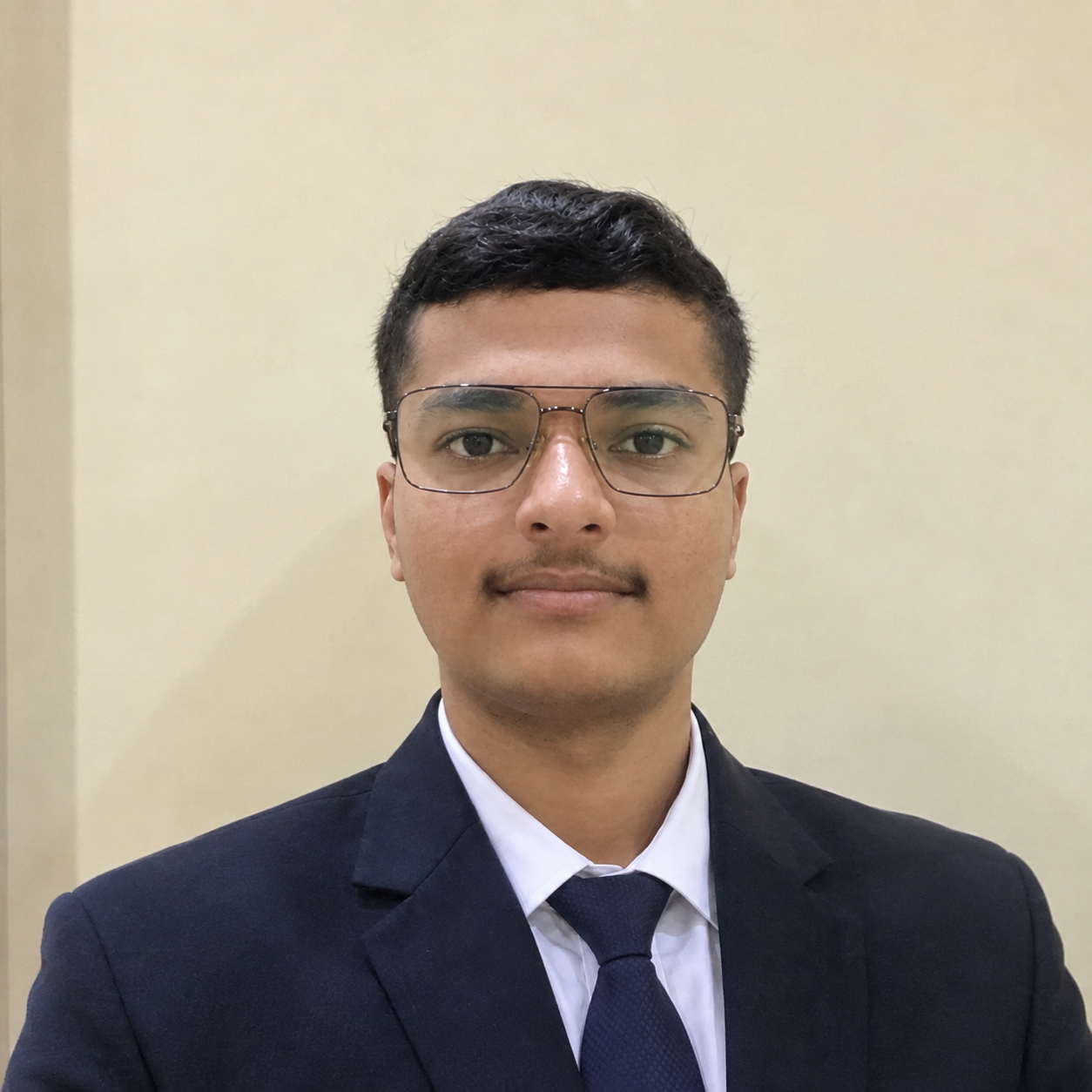
I have always been driven by curiosity more than by any single subject. From a young age I read beyond my class, asked questions that did not fit the lesson plan, and treated learning as something open — not something to be boxed into one career path or one exam.
That instinct never left me. It is also why MCESP exists.
I come from a Scheduled Caste family in India. My parents built their lives through education under conditions far harder than mine. Their parents, in turn, chose schooling for their children when poverty, limited awareness, and social pressure made that choice difficult. I inherited not only their expectations, but a clear view of what access — or the lack of it — can decide.
I was fortunate: books at home early, strong academics, and adults who did not always shut down a questioning child. I was less fortunate in other ways, and I learned early that the world does not distribute opportunity evenly. Talent appears in every village and every neighbourhood. Confidence, networks, legal literacy, first capital, and the simple permission to try do not.
There is another cost that is quieter, and just as serious. Established circles rarely grant growing people from the margins room to fail. Mistakes that would be treated as normal steps in learning for some are treated as proof of unfitness for others. Under that pressure, many become careful in the wrong way. They hide struggle. They step away from their own questions and identity. And too often, when they finally gain a little ground, they pass on the same narrow permission they were given — leaving the next person with even less space to attempt, err, and grow.
MCESP is built against that pattern.
In many communities I know, children invent games and tools from whatever is around them. That creativity is real. Too often it fades as they grow older — not because ability disappears, but because education, formal systems, and enterprise culture were never designed to include them as equal participants. People stop trusting that their ideas belong in the open. They stop stepping forward.
MCESP is a framework to bring underrepresented youth and communities into enterprise, skills, and sustainable livelihoods — deliberately, not as an afterthought. It is also a commitment to keep room for failure: the ordinary, human room in which anyone is allowed to try, fall short, learn, and try again without being written off. Without that room, inclusion is only a slogan. With it, growth becomes possible for people who were never given a fair first step.
In India we are building this through learning tools, community structures, and regional insight. Globally, the same principle holds: where a few circles dominate markets, institutions, and decision rooms, we work to widen the circle so that ability is no longer trapped by birth, postcode, or social position — and so that no one’s worth is measured only by a perfect record.
I do not claim to have perfect answers. I do claim that leaving margins outside the mainstream is a loss for everyone — and that curiosity, courage, structured support, and the freedom to fail forward can change who gets to build.
If you share that belief, this programme is for you to join, shape, and carry into your own context.
Background
- Founder of MCESP; building the programme under the Kectil community framework
- BS in Aeronautics and Space Technology, IIT Madras
- Kectil Cohort 2026; leading a multi-region community initiative
- Selected for the Viksit Bharat Young Leaders Dialogue 2026; national-level recognition for work on India as a start-up capital
- Developed Prajna Intelligence as a regional mapping layer for grounded programme design
- Advancing Qvritti as the digital learning vehicle for accessible enterprise education
- Based in Ayodhya, Uttar Pradesh, India